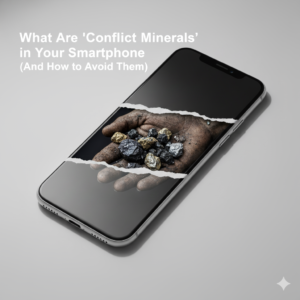
We all love our phones. I say, be it the truth, they are almost a part of us. We can use them to communicate with our family, to watch stupid videos, and to get through the day. However, I recently learned something and I felt like doing it. It concerns the contents of the phone. The small pieces and bits of metal make it all. As it happens, some of these small pieces are in those places of the world where people are quite, quite suffering. And the violence is, in fact, being funded by the trade of these materials. These are referred to as conflict minerals.
What’s That Even Mean?
Hold on, then, in the simplest terms: to vibrate your phone, to hold a charge, to connect all the little computer chips in it, it suffers four primary things. You’ll hear them called 3TG:
- Tin
- Tantalum
- Tungsten
- Gold
Now, these metals aren’t bad. They’re just elements from the earth. The problem is where they’re mined.
A huge chunk of the world’s supply comes from the Democratic Republic of Congo (DRC) and the countries around it. In many of these areas, violent armed groups have taken over the mines. They force local people, sometimes even kids, to work in dangerous, terrible conditions.
Then, they take these minerals and sell them on the world market. The money they make goes directly into buying more guns and funding a war that’s been going on for decades.
It’s a heartbreaking cycle. Our global demand for new electronics is, without us even knowing, helping to fuel this.
And it’s not just the 3TG. You’ve probably heard of Cobalt. It’s in every single rechargeable battery (in your phone, your laptop, your wireless earbuds). Over 70% of it comes from the DRC, and its mining is just as tangled up in child labor and human rights abuses.
So… What Am I Supposed to Do? Throw My Phone Away?
No! Absolutely not. Please don’t.
Feeling guilty doesn’t help anyone. This problem is huge and systemic, and it’s not on you or me to solve it alone.
But we can be smarter consumers. And our small choices, when we all make them, add up and send a big message to the companies that make these gadgets.
Here are a few realistic things you can do.
1. The Best & Easiest Option: Buy Refurbished.
I’m serious, this is the #1 best thing you can do. When you buy a “renewed” or “refurbished” phone, you’re not telling a company, “Go mine more stuff!” You’re using what’s already been made. You are creating zero new demand for these minerals. It’s cheaper for you, and it’s 100% the most ethical and eco-friendly choice.
2. Hold On To Your Phone a Little Longer.
The “two-year upgrade” is mostly a marketing trick. If your phone still works, if the battery is still decent… just keep it! The longer we all use our devices, the less demand there is for new ones.
3. If You Must Buy New, Do a 5-Minute Check.
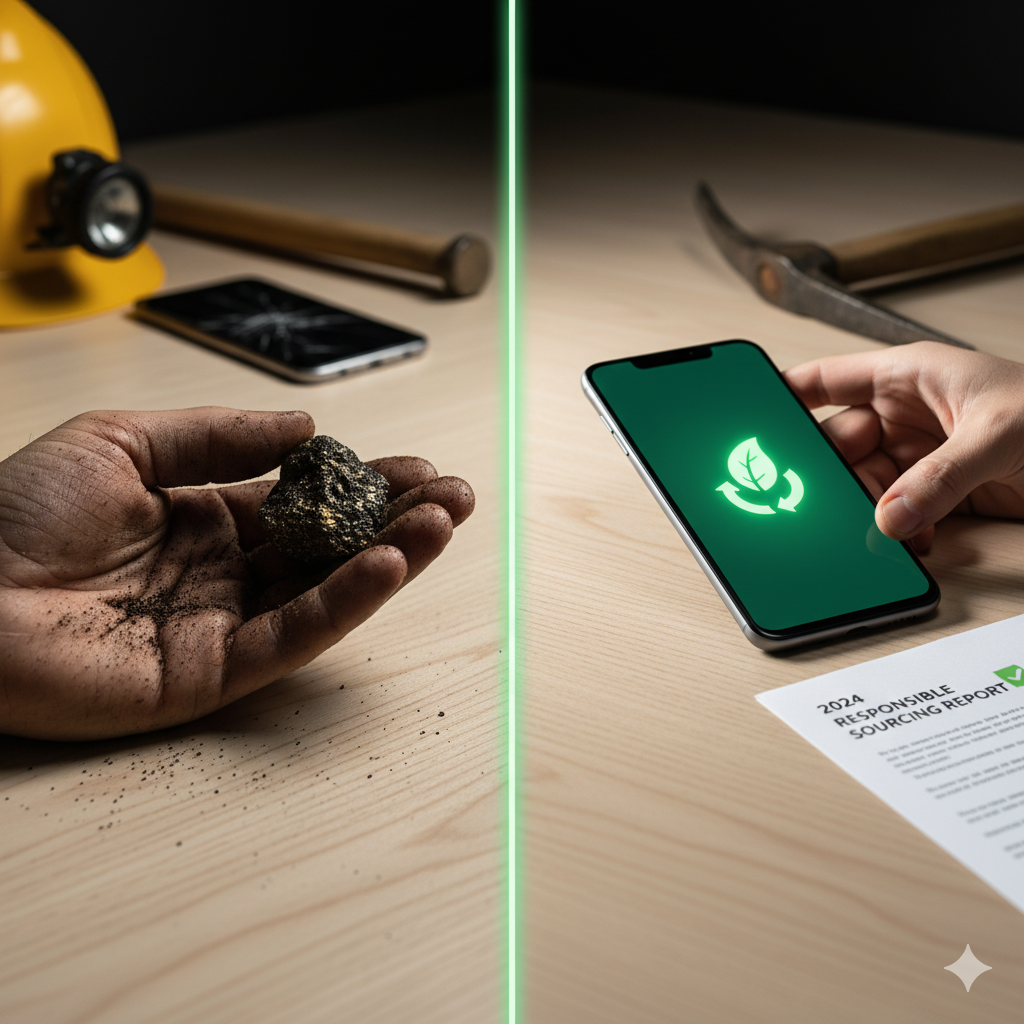
The big companies (Apple, Samsung, Google) know we’re watching them. They’re actually required by law to publish reports about where their minerals come from.
You can literally Google “Apple conflict minerals report.” You don’t have to read the whole 50-page boring document. Just look at the summary. Are they open about the problem? Do they talk about “auditing” their suppliers (which means checking on them)? Do they say they’ve “removed” suppliers who don’t meet their standards?
A company that’s trying will be open about it.
A Few Quick Answers (FAQ)
Q: What are conflict minerals, in a nutshell?
A: There are four minerals (tin, tantalum, tungsten, and gold) that are mined and sold by armed groups to fund war and human rights abuses, especially in the Democratic Republic of Congo.
Q: Are these in all electronics?
A: Yep. Pretty much anything with a circuit board. Phones, laptops, tablets, TVs, game consoles.
Q: This is depressing. What’s the point?
A: The point is that things are getting better because people started asking questions! Ten years ago, no one was talking about this. Now, companies are forced to be transparent. Your awareness, your questions, and your choices (like buying refurbished) are what keep pushing them to do better.
Q: Can it be that my phone (iPhone or Samsung) is bad?
A: It’s not that simple. It has those minerals, yes. However, the opposite is true, as companies such as Apple are quite strict and open about this. They are auditing their suppliers and have been taking years to clean their supply chain. None of the companies is flawless, but some are certainly making much more efforts than others.